Umbrella vs. Rain Hat: Which Gear Keeps You Drier in Heavy Rain?

Ask ten people whether an umbrella or a rain hat wins in a downpour and you'll get ten confident answers, most of them shaped by whatever happened to be hanging by the door when they left. Heavy rain doesn't fall in one shape. It arrives as a wind-driven slant, a drumming vertical curtain, or a sideways mist that soaks your trousers from the knee down. Each kind punishes different gear.
So the comparison comes down to four practical questions: how much of you stays covered, what happens when the wind picks up, whether you can still see where you're going, and how badly you need your hands. Here's how an umbrella and a rain hat actually behave.
A typical compact umbrella opens to roughly 90 to 100 centimetres across. That's enough to shelter your head, shoulders and upper chest if you hold it centred, and very little else. A full-size model gives you another 20 centimetres or so, which is the difference between dry shoulders and damp ones. Golf umbrellas go wider still, but they're awkward to carry and they turn into sails in any real gust.
A rain hat covers your head, face, ears and the back of your neck, plus whatever your collar and shoulders catch as runoff. That's it. Unless the brim is unusually wide, your shoulders get wet in a genuine downpour, and your torso relies entirely on your jacket.
Neither option does much for your legs. Rain bounces off the pavement and climbs your calves, and every step through a puddle sends water over the toe of your shoe. On a wet walk, boots and a slightly longer jacket matter more than the choice between hat and umbrella — worth remembering before you spend money on the wrong upgrade.
Umbrellas shed water in a ring around you. Walk close to someone on a narrow pavement and you'll funnel a steady stream onto their shoulder. Step onto a bus and you'll leave a puddle. A rain hat has no drip line; the water runs off behind you and down your back, and the worst you carry indoors is your own wet coat.
This is where the two part company most sharply. An umbrella is a sail held at arm's length. Gusts catch the canopy, torque your wrist and, past a certain point, fold the whole thing inside out. Corner buildings, bus shelters and underpasses funnel wind into sharp bursts, so a walk that starts calm can turn miserable in ten metres.
A hat is attached to you. Wind pushes it, but it can't invert, and it can't be snatched sideways out of your grip. That said, a loose-fitting hat will simply leave your head in a strong gust, which is why a chin strap or an adjustable band is worth having. A stiff brim that keeps its shape also beats a floppy one, which folds up and dribbles water onto your face.
If wind is the main feature of the forecast, the hat wins by a wide margin. If the rain is falling straight down, an umbrella handles it comfortably and covers more of you.
An umbrella canopy sits above your eyeline, which is fine until you need to look up. In practice you tilt it forward, hunch, and walk semi-blind at crossings. You also take up more space, which is why crowded pavements turn into a slow-motion pinball game of spokes and apologies.
A hat keeps your head up and your hands free, but a low brim carves away your peripheral vision. Before stepping off a kerb, turn your head further than usual. Bright or high-visibility colours help drivers see you, and they help you spot each other on dark, wet mornings when everyone is hunched under grey fabric.
An umbrella occupies one hand from the moment you open the door until you shake it out somewhere dry. Carrying a coffee, a phone, a shopping bag or a child's hand becomes a juggling act, and reaching for keys under a canopy means getting rained on anyway. Then there's the aftermath: a wet umbrella drips across the floor of the shop, the train carriage and your hallway.
A rain hat asks nothing of you. Hands stay free, there's nothing to shake out, and no puddles follow you indoors. The trade-offs are hat hair and the fact that you wear your dampness inside with you instead of leaving it dripping in a stand.
One useful middle ground: a jacket hood plus a hat, or a hat worn under an umbrella on changeable days. Hoods move with your head and never invert, which makes them a decent safety net when the umbrella gives up.
Most people don't need to pick a side for life — they need to read the morning correctly. A simple set of rules:
When you check the forecast, look at wind speed and gusts rather than only the chance of rain. A high percentage with light wind is umbrella weather. A modest percentage with strong gusts will still wreck one.
The most reliable setup is both, chosen by the morning's wind rather than habit. If you're buying, look for a vented canopy that resists turning inside out, and a hat with a firm brim, a snug fit and a strap you'll actually use. Keep a small towel near the door for the umbrella and a coat hook that lets a wet hat dry in open air rather than in a crumpled heap.
If you're walking long distances in cold, wet conditions and you have any health concerns about exposure, cold stress or mobility, speak to a doctor or pharmacist about what's sensible for you. For everyone else, the rule is simple: umbrella for still air, hat for wind, and never trust a folding canopy on a day the trees are bending sideways.
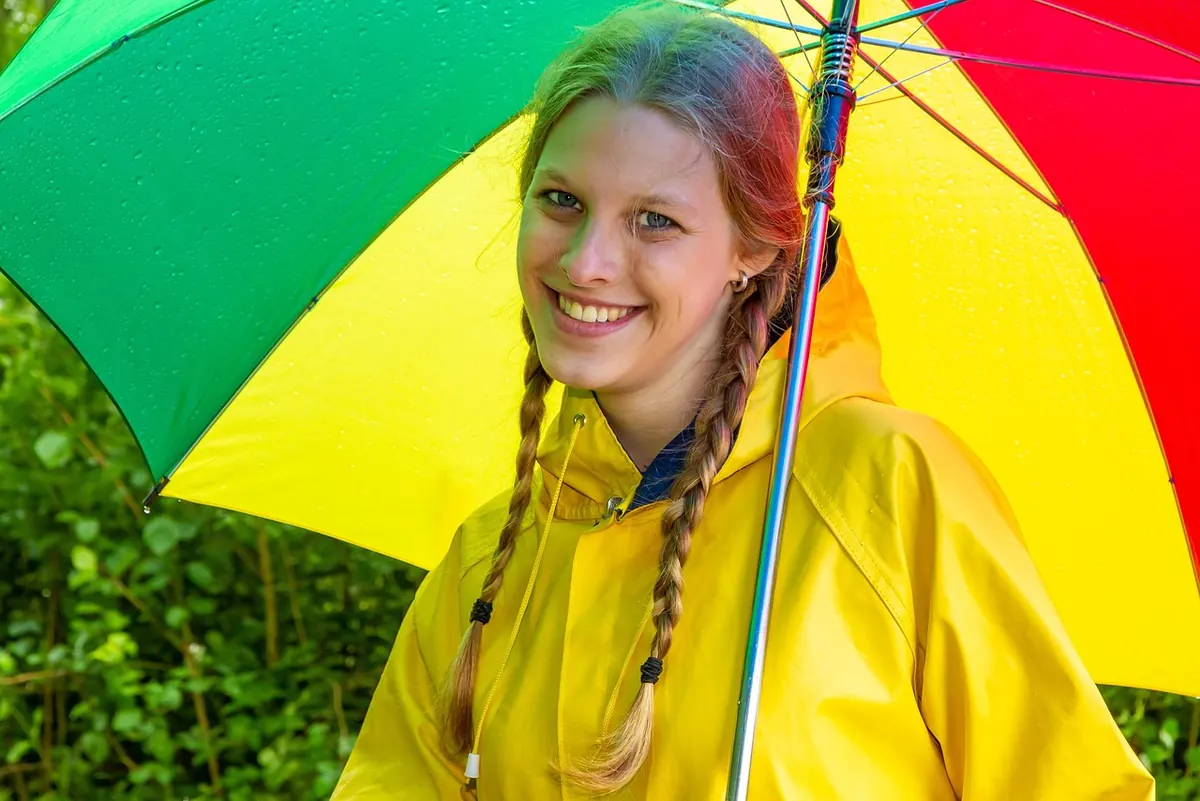
Photo: janrye / Pixabay